welding principles and applications 8th edition pdf
Summary
Need the 8th Edition of Welding Principles & Applications in PDF? Get instant access to this essential resource! Boost your welding skills today. #welding
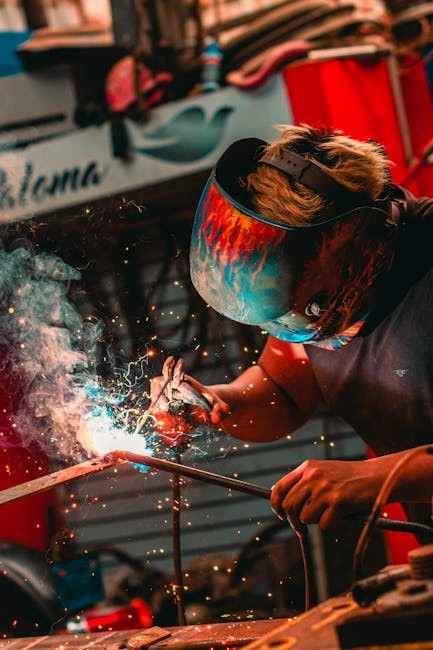
Welding joins materials, creating robust bonds for countless applications.
It’s a cornerstone of modern manufacturing, construction, and repair, offering durable solutions.
What is Welding? ― A Fundamental Overview
Welding is a fabrication process that joins materials – usually metals or thermoplastics – by causing coalescence. This coalescence is achieved through the application of heat, pressure, or a combination of both, often with the addition of a filler material to create a strong bond. Unlike simpler joining methods like soldering or brazing, welding melts the base materials, creating a fusion.
Fundamentally, welding relies on establishing a metallurgical bond between the pieces being joined. This bond isn’t merely adhesive; it’s a true blending of the materials at a molecular level. The process requires careful control of parameters like temperature, pressure, and shielding gases to prevent oxidation and ensure weld integrity.
Different welding techniques exist, each suited for specific materials, thicknesses, and applications. The choice depends on factors like cost, speed, and desired weld quality. Understanding these fundamentals is crucial for anyone involved in welding, from beginners to experienced professionals.
Historical Development of Welding Techniques
Welding’s origins trace back to the Bronze and Iron Ages, with evidence of forge welding – joining metals by hammering while hot – dating back millennia. Ancient civilizations utilized this method for creating tools and decorative items. The Middle Ages saw continued refinement of forge welding, primarily by blacksmiths.
The 19th century marked a turning point with the advent of arc welding in the 1880s, utilizing an electric arc to melt and fuse metals. Resistance welding followed shortly after, employing pressure and electrical resistance. These innovations fueled the growth of industrialization.
The 20th century witnessed rapid advancements, including the development of gas welding, submerged arc welding, and, crucially, the introduction of shielding gases to protect the weld from atmospheric contamination. Post-World War II, technologies like MIG and TIG welding emerged, offering greater precision and versatility, shaping modern welding practices.

Welding Processes: An In-Depth Look
Numerous welding processes exist, each suited for specific materials and applications. Understanding these methods is crucial for achieving optimal weld quality and efficiency.
Fusion Welding Processes
Fusion welding relies on melting base materials to create a weld, often with a filler metal added for increased strength and volume. This category encompasses several widely used techniques, each offering unique advantages depending on the application and materials involved.
The core principle involves generating sufficient heat to raise the metal(s) to their melting point, forming a molten pool that solidifies upon cooling, creating a metallurgical bond. Controlling the heat input, shielding the weld pool from atmospheric contamination, and managing the cooling rate are critical factors in achieving sound welds.
These processes are versatile, capable of joining a wide range of metals, and are frequently employed in industries like manufacturing, construction, and automotive. Careful consideration of material properties, weld geometry, and desired mechanical characteristics guides the selection of the most appropriate fusion welding method.
Shielded Metal Arc Welding (SMAW) ― Stick Welding
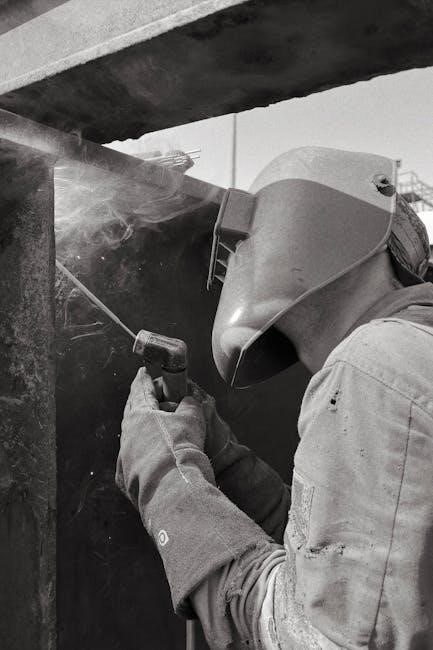
Shielded Metal Arc Welding, commonly known as stick welding, is a manual process utilizing a consumable electrode coated in flux. An electric arc forms between the electrode and the workpiece, melting both to create the weld. The flux coating shields the weld pool from atmospheric contamination, preventing oxidation and porosity.
SMAW is renowned for its versatility, portability, and relatively low equipment cost, making it suitable for both shop and field applications. It can weld a wide variety of metals, including steel, stainless steel, and cast iron, in all positions. However, it requires significant operator skill to maintain a consistent arc length and travel speed.
Slag, a byproduct of the flux, must be removed after each weld pass. While offering excellent control, SMAW is generally slower than other welding processes and produces more spatter. It remains a foundational welding technique widely used for repair work and structural fabrication.
Gas Metal Arc Welding (GMAW) ౼ MIG Welding
Gas Metal Arc Welding, or MIG welding, is a semi-automatic or automatic process employing a continuously fed consumable wire electrode and a shielding gas. The arc melts the wire and the workpiece, forming the weld. Common shielding gases include argon, helium, carbon dioxide, and mixtures thereof, protecting the weld pool from atmospheric contaminants.
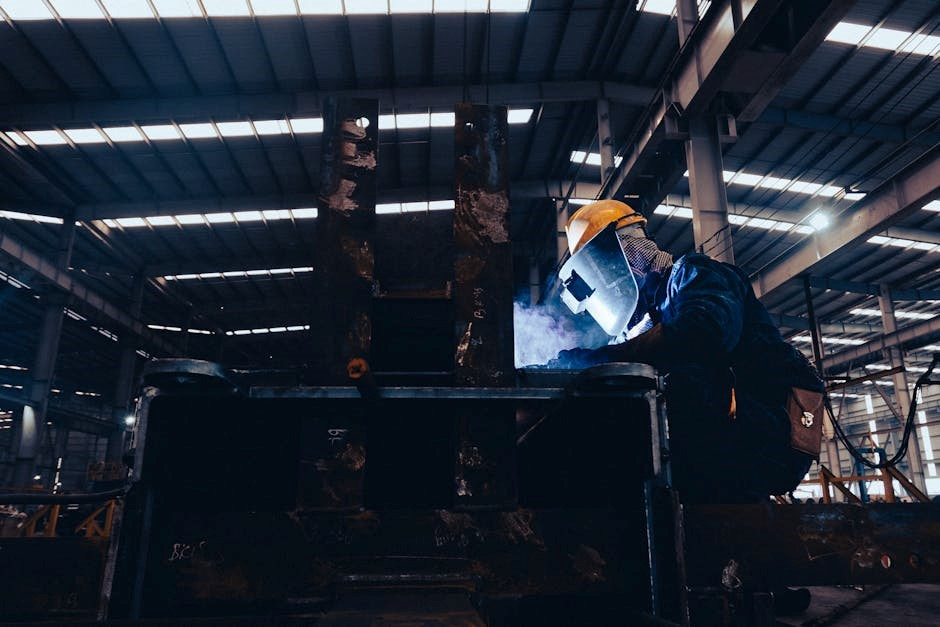
MIG welding is favored for its high deposition rates, making it efficient for production welding. It’s relatively easy to learn and can weld a broad range of metals and thicknesses. Different transfer modes – short-circuit, globular, spray, and pulsed-spray – allow for optimization based on material and application;
Compared to SMAW, MIG welding generally produces cleaner welds with less slag. However, it’s typically less portable due to the required gas cylinder and wire feeder. It’s extensively used in automotive, manufacturing, and robotic welding applications.
Gas Tungsten Arc Welding (GTAW) ― TIG Welding
Gas Tungsten Arc Welding, commonly known as TIG welding, utilizes a non-consumable tungsten electrode to produce the weld arc. A shielding gas, typically argon, protects the weld pool and electrode from oxidation. Filler metal can be added manually, offering precise control over weld composition.
TIG welding excels in producing high-quality, precise welds on a wide variety of metals, including aluminum, magnesium, stainless steel, and dissimilar metal combinations. It’s often used for critical applications requiring exceptional weld integrity and aesthetic appearance.
While offering superior weld quality, TIG welding is generally slower and requires greater operator skill than other processes like MIG or stick welding. It’s frequently employed in aerospace, automotive, and artistic welding where precision is paramount. The process allows for excellent control over heat input and weld bead geometry.
Solid-State Welding Processes
Solid-state welding represents a distinct category of joining processes, differing fundamentally from fusion welding. Instead of melting the base materials, these techniques create a bond through the application of pressure and, often, heat – but below the melting point. This avoids the issues associated with molten metal, like porosity and solidification cracking.
Key advantages include the ability to join dissimilar metals that are otherwise unweldable by fusion methods, minimal distortion, and often, no filler metal or shielding gas requirements. These processes are particularly valuable when dealing with materials sensitive to heat treatment or requiring precise dimensional control.
Examples include friction welding, ultrasonic welding, explosion welding, and diffusion welding; Each method leverages unique physical principles to achieve atomic bonding between the surfaces, resulting in strong, reliable joints. They are increasingly utilized in specialized manufacturing applications.
Friction Welding – Principles and Applications
Friction welding generates heat through mechanical friction between two surfaces in contact, under applied pressure. Typically, one part is held stationary while the other is rapidly rotated, creating intense frictional heat at the interface. This heat plasticizes the materials, allowing them to forge a bond upon stopping rotation and increasing pressure.
The process is remarkably clean, producing minimal fumes or spatter, and is well-suited for joining dissimilar metals. It’s commonly used for creating axisymmetric components like shafts, pipes, and drill bits. Applications span automotive, aerospace, and oil & gas industries.
Variations include friction stir welding (FSW), a related technique employing a non-consumable rotating tool to create a solid-state weld. FSW is particularly effective for aluminum alloys and offers excellent mechanical properties and minimal distortion.
Ultrasonic Welding – A Modern Approach
Ultrasonic welding (USW) utilizes high-frequency mechanical vibrations to create a solid-state weld. Parts are clamped together under pressure, and ultrasonic energy is applied, causing localized heating due to intermolecular friction at the joint interface. This rapid heating softens the materials, enabling them to fuse together.
USW is exceptionally fast, efficient, and ideal for joining thermoplastic materials, though it can also weld certain metals, particularly in wire bonding applications. It’s a ‘cold’ process, minimizing heat-affected zones and distortion. Common applications include packaging, automotive interiors, medical devices, and electronics assembly.
The process is highly repeatable and requires minimal surface preparation. Modern USW systems often incorporate advanced control features for precise energy delivery and weld quality monitoring, ensuring consistent results.
Welding Metallurgy
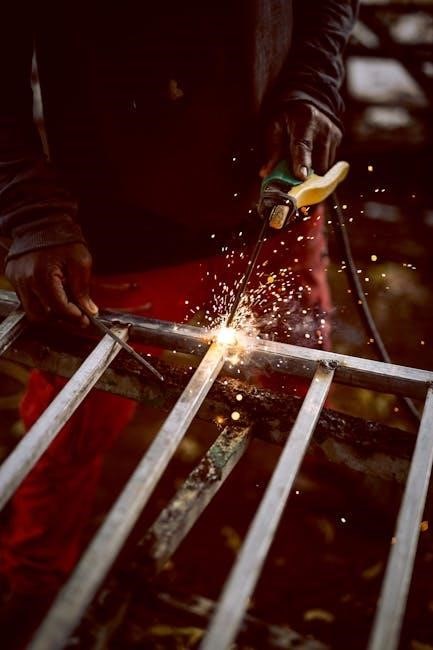
Understanding weld metal structure, properties, and potential defects is crucial. Metallurgy dictates weld performance, influencing strength, ductility, and resistance to failure.
The Science Behind the Weld
Welding isn’t merely melting and fusing metals; it’s a complex interplay of thermal cycles, material science, and physics. The intense heat introduces rapid heating and cooling, fundamentally altering the microstructure of the base materials and the weld metal itself. This transformation dictates the final weld’s mechanical properties – its strength, ductility, hardness, and resistance to cracking.
Crucially, the welding process creates a localized temperature gradient. The area directly under the arc experiences extreme heat, while surrounding regions remain relatively cool. This gradient drives diffusion, influencing the movement of atoms and the formation of new phases. Understanding these phase changes – from solid to liquid, and back again – is paramount to predicting weld behavior.
Furthermore, the cooling rate significantly impacts the resulting microstructure. Faster cooling often leads to harder, more brittle structures, while slower cooling promotes softer, more ductile formations. Controlling these parameters is essential for achieving desired weld characteristics and preventing defects like porosity or distortion.
Heat-Affected Zone (HAZ) – Formation and Properties
The Heat-Affected Zone (HAZ) is the area surrounding the weld that experiences temperature changes, though not high enough to melt. Its formation is an unavoidable consequence of the welding process, and its properties are significantly altered compared to the base metal. The extent of the HAZ depends on factors like heat input, material composition, and cooling rate.
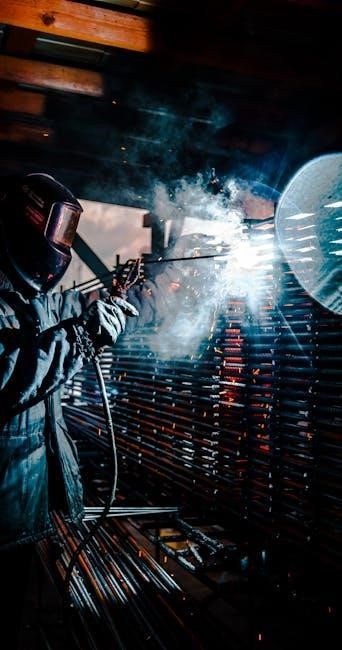
Microstructural changes within the HAZ are diverse. Grain growth can occur, reducing strength, while phase transformations can lead to hardening or embrittlement. The HAZ is often the weakest link in a welded joint, susceptible to cracking, particularly under stress. Controlling HAZ size and properties is therefore critical.
Factors influencing HAZ characteristics include the welding process used, the base metal’s chemical composition, and preheating or post-weld heat treatment. Careful selection of welding parameters and appropriate heat treatment can minimize detrimental effects and optimize the HAZ for desired performance, ensuring joint integrity and longevity.
Phase Transformations in Welding
Phase transformations are fundamental to understanding welding metallurgy, occurring as the material heats and cools through critical temperatures. During welding, the base metal and filler metal undergo rapid heating and cooling cycles, driving changes in their crystalline structure. These transformations dictate the final microstructure and, consequently, the mechanical properties of the weldment.
Common transformations include austenite formation at elevated temperatures, followed by cooling-rate dependent transformations to ferrite, pearlite, bainite, or martensite. The specific phases formed depend on the steel’s composition and cooling speed. Martensite, while hard and strong, is brittle and prone to cracking if not properly managed.
Controlling these transformations is vital for achieving desired weld properties. Techniques like preheating, interpass temperature control, and post-weld heat treatment are employed to manipulate cooling rates and promote favorable phase development, enhancing ductility, toughness, and resistance to failure. Understanding these principles is crucial for successful welding.
Weld Metal Composition and Control
Weld metal composition significantly impacts the final weld’s properties, demanding careful control. The composition arises from the base metal, filler metal, and any additions made during the welding process. Maintaining appropriate chemical balance is crucial for achieving desired strength, ductility, corrosion resistance, and other critical characteristics.
Filler metal selection is paramount, matching or slightly differing from the base metal to achieve desired weld characteristics. Alloying elements in the filler metal can refine grain structure, improve toughness, or enhance corrosion resistance. Dilution, the mixing of base and filler metal, must be considered.
Control methods include precise filler metal selection, maintaining clean welding surfaces, and employing appropriate welding parameters. Analyzing weld metal chemistry post-weld confirms composition and identifies potential issues. Proper control ensures weld integrity and performance, preventing defects like cracking or porosity.

Welding Power Sources
Power sources deliver the energy for welding, dictating arc characteristics. They range from simple transformers to sophisticated inverters, influencing weld quality and efficiency.
Transformer-Based Power Sources
Transformer-based welding power sources represent a traditional, yet still widely utilized, technology. These sources operate on the principle of electromagnetic induction to step down or step up voltage levels, providing the necessary electrical characteristics for various welding processes. They are generally robust, reliable, and relatively cost-effective, making them a popular choice for many applications.
The core component is, naturally, the transformer itself, consisting of primary and secondary windings. The input voltage applied to the primary winding creates a magnetic flux, which induces a voltage in the secondary winding. The turns ratio between the windings determines the voltage transformation.
Common types include single-phase and three-phase transformers, each suited for different power requirements. While offering simplicity and durability, transformer-based sources typically exhibit larger size and weight compared to newer inverter technologies. They also often lack the precise control capabilities found in inverter machines, potentially impacting arc stability and weld quality in certain scenarios.
Inverter-Based Power Sources
Inverter-based welding power sources represent a significant advancement in welding technology. Unlike traditional transformer-based systems, inverters utilize solid-state electronics to convert AC power to DC, and then often back to AC at a different frequency or waveform. This process allows for superior control over the welding arc and offers numerous advantages.
These sources are generally smaller, lighter, and more energy-efficient than transformer-based machines. The ability to precisely control the output waveform – including pulse shaping and frequency adjustment – enables optimized arc characteristics for specific materials and welding processes. This leads to improved weld quality, reduced spatter, and enhanced operator control.
Inverter technology also facilitates advanced features like synergic control, where the machine automatically adjusts parameters based on material type and thickness. While typically more expensive upfront, the benefits of inverter power sources often outweigh the cost for demanding applications and skilled welders.
Welding Safety
Prioritizing safety is paramount in welding; hazards include burns, fumes, and electrical shock;
Proper precautions and training are essential for a secure work environment.
Personal Protective Equipment (PPE)
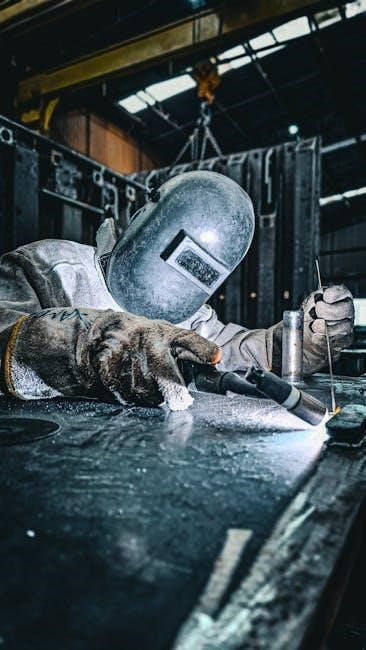
Essential for welder safety, PPE minimizes exposure to hazards. A welding helmet, equipped with an auto-darkening filter, shields eyes and face from intense radiation – ultraviolet, infrared, and visible light. Welding gloves, typically made of leather, protect hands from burns, cuts, and abrasion.
Protective clothing, such as flame-resistant jackets and pants, prevents skin burns from sparks and spatter. Safety glasses worn under the helmet offer additional eye protection. Steel-toed boots safeguard feet from falling objects and hot materials.
Respirators are crucial when welding materials that produce hazardous fumes, filtering out harmful particles. Earplugs or earmuffs reduce noise exposure, protecting hearing. Regular inspection and maintenance of PPE are vital to ensure its effectiveness and the welder’s well-being. Proper fit is also critical for optimal protection.
Ventilation and Fume Control
Welding generates fumes containing potentially hazardous particles and gases; Effective ventilation is paramount for maintaining a safe working environment. Local exhaust ventilation (LEV) systems, positioned close to the welding arc, capture fumes at the source, preventing their dispersion into the workspace.
General ventilation, while less effective than LEV, provides overall air exchange, diluting fume concentrations. Proper airflow is crucial; air should move from clean areas to the welding zone, not vice versa. The type of ventilation required depends on the welding process, materials being welded, and workspace configuration.
Regular monitoring of air quality ensures ventilation systems are functioning correctly. Respirators should be used as a supplementary measure, especially in confined spaces or when LEV is insufficient. Ignoring fume control can lead to respiratory illnesses and long-term health problems.
Welding Applications Across Industries
Welding’s versatility shines across sectors – from automotive frames and aerospace components to robust construction and critical pipeline infrastructure projects.
Welding in Automotive Manufacturing
Automotive manufacturing heavily relies on various welding processes to assemble vehicle bodies, chassis, and critical components. Resistance spot welding is predominantly used for joining sheet metal parts, offering high-speed and efficient production. However, processes like Gas Metal Arc Welding (GMAW) and Laser Beam Welding (LBW) are increasingly employed for welding high-strength steels and aluminum alloys, crucial for lightweighting initiatives and enhancing vehicle performance.
Precise weld quality is paramount in automotive applications, directly impacting safety and structural integrity. Automated welding systems, including robotic arms, ensure consistent weld parameters and minimize defects. Furthermore, advanced techniques like tailored blank welding – joining different steel thicknesses – optimize material usage and improve crashworthiness. The industry continually adopts innovative welding solutions to meet evolving safety standards and fuel efficiency demands, driving advancements in materials and processes.
Welding in Aerospace Engineering
Aerospace engineering demands the highest levels of weld quality and reliability due to the extreme conditions experienced during flight. Materials like titanium, nickel alloys, and aluminum alloys are frequently joined using Gas Tungsten Arc Welding (GTAW) and Electron Beam Welding (EBW), offering precise control and minimal distortion. These processes are vital for manufacturing aircraft structures, engine components, and rocket bodies.
Non-destructive testing (NDT) methods, such as radiography and ultrasonic inspection, are extensively used to verify weld integrity and detect any internal flaws. Automated welding systems and robotic applications are becoming increasingly prevalent to ensure consistent weld quality and reduce human error. The industry prioritizes lightweight materials and advanced welding techniques to improve fuel efficiency and enhance aircraft performance, continually pushing the boundaries of welding technology.
Welding in Construction and Infrastructure
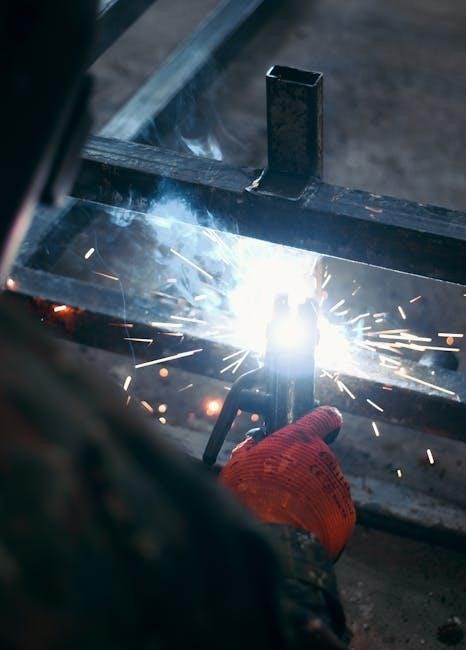
Construction and infrastructure projects heavily rely on welding for joining structural steel components, pipelines, and various other critical elements. Shielded Metal Arc Welding (SMAW), Flux-Cored Arc Welding (FCAW), and Submerged Arc Welding (SAW) are commonly employed due to their versatility and cost-effectiveness in field applications. Welding ensures the structural integrity of bridges, buildings, and offshore platforms, capable of withstanding significant loads and environmental stresses.
Pipeline construction, essential for transporting oil, gas, and water, utilizes automated welding techniques to achieve high-quality, continuous welds. Strict adherence to welding codes and standards, alongside rigorous inspection procedures, is paramount to guarantee safety and longevity. Modern advancements include the use of robotic welding systems for increased efficiency and precision, contributing to faster project completion and reduced maintenance costs within the construction sector.
Advanced Welding Technologies
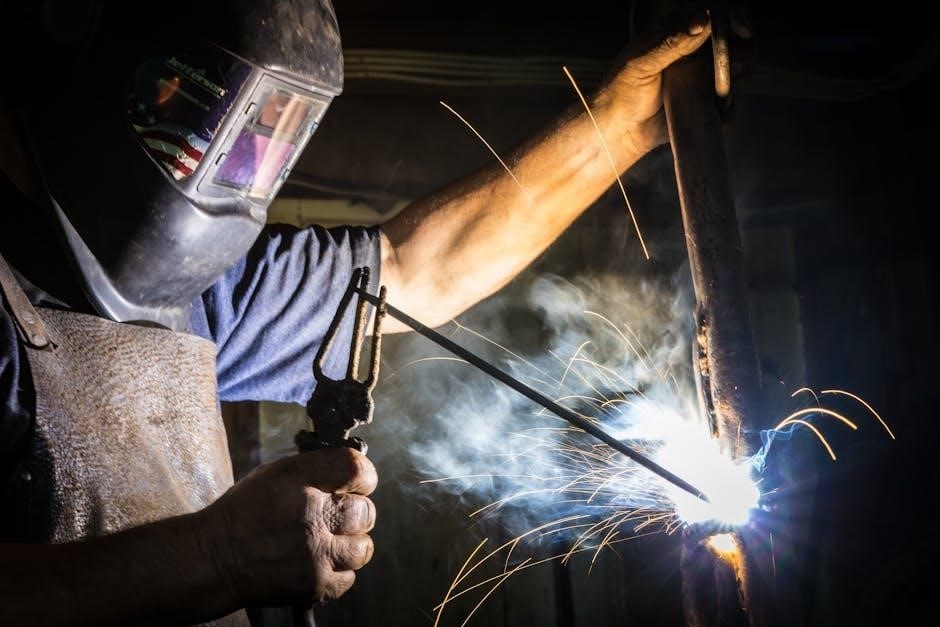
Innovative techniques like electron beam and friction stir welding push boundaries. These methods offer precision, efficiency, and unique capabilities for specialized applications.
Robotic Welding – Automation and Precision
Robotic welding represents a significant advancement in manufacturing, integrating automated systems to perform welding tasks with exceptional accuracy and repeatability. These systems typically consist of a robotic arm, welding power source, wire feeder, and control system, all working in coordinated harmony.
The benefits are numerous: increased production speed, reduced labor costs, improved weld quality, and enhanced worker safety by removing operators from hazardous environments. Robots excel at repetitive welds, ensuring consistent results across large production runs. Modern robotic cells often incorporate vision systems for seam tracking and adaptive welding, compensating for variations in part fit-up.
Programming these robots can be achieved through various methods, including teach pendant programming, offline programming using simulation software, and even demonstration by leading the robot arm through the desired weld path. The integration of robotics is transforming welding operations, driving efficiency and innovation across diverse industries.
Laser Beam Welding – High-Energy Applications
Laser beam welding (LBW) utilizes a highly focused laser beam as a heat source to melt and fuse materials. This process offers several advantages, including high welding speeds, narrow heat-affected zones, and the ability to join dissimilar metals. LBW is particularly well-suited for applications requiring precision and minimal distortion.
The process can be performed with or without filler metal, and shielding gases are often used to protect the weld pool from atmospheric contamination. LBW finds extensive use in industries like automotive, aerospace, and electronics, where intricate and high-quality welds are essential. Deep penetration welds are achievable with appropriate laser parameters.
However, LBW can be more expensive than traditional welding methods due to the cost of the laser equipment and associated operating expenses. Careful consideration of material reflectivity and absorption is crucial for successful LBW implementation. Automation and precise control are key to maximizing its potential.