coffee grind size chart pdf
Summary
Need the *perfect* coffee? ☕ Download our easy-to-read **coffee grind size chart PDF**! From French Press to Espresso, we’ve got you covered. Brew better today!

Coffee Grind Size Chart: A Comprehensive Guide
Navigating the world of coffee requires understanding grind size; a downloadable coffee grind size chart PDF offers a quick reference for optimal brewing, ensuring flavorful results.
Understanding Coffee Grind Size
Coffee grind size fundamentally impacts the surface area exposed during brewing, directly influencing extraction rates and, consequently, the final flavor profile. A coffee grind size chart PDF visually demonstrates the spectrum, from extra coarse to extra fine, each suited for specific brewing methods.
Coarser grinds, like those used in a French press, allow for longer steeping times without over-extraction, while finer grinds, essential for espresso, require rapid extraction due to their increased surface area. Understanding this relationship is crucial. A readily available chart PDF simplifies this, providing a tangible guide for achieving balanced and delicious coffee. Ignoring grind size leads to under-extracted, sour coffee or over-extracted, bitter brews.
Why Grind Size Matters
Grind size isn’t merely a preference; it’s a critical variable in coffee brewing, dictating how efficiently water extracts flavor compounds. A coffee grind size chart PDF highlights this importance, showcasing how different grinds unlock varying levels of acidity, sweetness, and body.
Incorrect grind size leads to imbalanced flavors – too coarse, and the coffee will be weak and sour; too fine, and it will be bitter and harsh. Utilizing a chart PDF ensures you select the appropriate grind for your chosen brewing method, maximizing flavor potential. Freshly ground beans, paired with the correct grind size, elevate the coffee experience, surpassing pre-ground options in both aroma and taste. It’s a respectable pursuit for any coffee enthusiast.
The Impact of Grind Size on Extraction
Extraction, the process of dissolving soluble compounds from coffee grounds, is profoundly affected by grind size. A coffee grind size chart PDF visually demonstrates this relationship, illustrating how surface area impacts extraction rate. Finer grinds expose more surface area, leading to faster extraction, while coarser grinds extract slower.
Under-extraction occurs with coarse grinds, resulting in sour, weak coffee, as insufficient compounds are dissolved. Conversely, over-extraction with fine grinds yields bitter, harsh flavors due to excessive compound release. A chart PDF serves as a guide, helping brewers achieve balanced extraction. Understanding this impact is crucial; it’s a key step beyond simply using pre-ground coffee, unlocking a world of nuanced flavors.
Grind Size and Brewing Methods: An Overview
Different brewing methods demand specific grind sizes for optimal results, a concept clearly illustrated in a coffee grind size chart PDF. Immersion methods like French Press require a coarse grind to prevent sediment passing through the filter. Pour-over methods, conversely, benefit from medium-fine grinds, facilitating controlled extraction.
Espresso machines necessitate a very fine grind to create the necessary pressure. A chart PDF simplifies this, providing a quick reference for matching grind size to your chosen brewing technique. Ignoring this relationship leads to inconsistent and often disappointing results. Utilizing a chart empowers home brewers to move beyond pre-ground options and truly tailor their coffee experience.

Detailed Grind Size Chart
A comprehensive coffee grind size chart PDF visually details each grind – from extra coarse to extra fine – and their corresponding brewing applications for clarity.
Extra Coarse Grind
Characterized by its large, chunky particles, the extra coarse grind resembles sea salt. A coffee grind size chart PDF will clearly illustrate this texture. This grind is specifically designed for brewing methods requiring extended steep times, preventing over-extraction and bitterness.
It’s the most forgiving grind size, allowing for longer brew durations without compromising flavor. The larger surface area minimizes contact with water, resulting in a cleaner, less sediment-filled cup. Understanding this grind’s purpose, as detailed in a helpful chart, is crucial for achieving optimal results with specific brewing techniques. Visual aids within the PDF demonstrate the difference between extra coarse and other grind sizes, aiding in accurate identification.
Uses for Extra Coarse Grind
A coffee grind size chart PDF highlights that extra coarse grind excels in cold brew coffee preparation. Its large particle size allows for a prolonged steeping process – often 12-24 hours – without producing a bitter taste.
Percolators also benefit from this grind, as the coarser texture prevents clogging and ensures even extraction. Some traditional brewing methods, like cowboy coffee, also utilize this size. The PDF will visually demonstrate how this grind’s size prevents fines from passing through the filter, resulting in a cleaner cup; It’s ideal for those who prefer a low-acidity, smooth coffee experience, and the chart provides a clear guide for achieving consistent results with these specific brewing styles.
Coarse Grind
A coffee grind size chart PDF clearly illustrates that coarse grind resembles sea salt in texture. This grind size is specifically suited for brewing methods that utilize a longer steep time, allowing for sufficient extraction without over-extraction.
French presses are the quintessential application for a coarse grind, as it prevents grounds from slipping through the mesh filter. The PDF will often show a visual comparison to help users identify the correct coarseness. Cold brew systems also frequently employ this grind. Using a finer grind in these methods leads to sediment in your cup and a potentially bitter flavor. The chart emphasizes the importance of consistency for optimal flavor profiles.
Brewing Methods for Coarse Grind
A coffee grind size chart PDF highlights several brewing methods that thrive with a coarse grind. Primarily, the French press benefits immensely, as the larger particles prevent clogging and ensure a cleaner cup. Cold brew coffee, steeped for extended periods, also demands this coarseness to avoid over-extraction and bitterness.
Percolators, though less common today, traditionally utilize a coarse grind. Some cupping protocols, used for professional coffee tasting, also specify a coarse grind to accurately assess the bean’s characteristics. The PDF often details the ideal water-to-coffee ratios for each method. Remember, a consistent coarse grind is crucial for even extraction and a balanced, flavorful brew, as visually demonstrated on the chart.
Medium-Coarse Grind
A coffee grind size chart PDF frequently positions medium-coarse as a versatile option, bridging the gap between coarser and finer textures. This grind size excels in Chemex brewers, allowing for a slower drip rate and a clean, bright cup. It’s also well-suited for pour-over methods utilizing larger cone filters, promoting even saturation and extraction.
Some find it effective in certain automatic drip coffee makers, particularly those with longer brew cycles. The PDF will often illustrate the particle size visually, comparing it to table salt or sea salt. Achieving consistency with a medium-coarse grind is key; uneven particles can lead to both under and over-extraction, impacting the final flavor profile.
Ideal for Specific Brewers
A detailed coffee grind size chart PDF will highlight that medium-coarse is particularly well-matched to specific brewing devices. The Chemex, with its thick filter, benefits immensely from this grind, allowing for proper filtration and a clean, sediment-free brew. Similarly, many pour-over systems, like the Hario V60 when using a larger filter size, thrive with this consistency.
Cold brew coffee also frequently utilizes a medium-coarse grind, as the extended steeping time allows for sufficient extraction without excessive bitterness. The PDF often includes visual cues, showing the brewer alongside the recommended grind size. Understanding these pairings, as detailed in the chart, is crucial for maximizing flavor and minimizing unwanted characteristics.
Medium Grind
The coffee grind size chart PDF consistently identifies medium grind as the most versatile and widely applicable option. This consistency resembles granulated sugar and strikes a balance between surface area and extraction time. It’s the go-to choice for standard automatic drip coffee makers, delivering a reliably flavorful cup without overwhelming the brewing process.
Many find this grind size forgiving, making it ideal for beginners experimenting with different coffees. A good PDF will illustrate this visually, comparing it to common household items. Furthermore, it’s suitable for some siphon brewers and Aeropress methods, though adjustments may be needed based on personal preference. The chart emphasizes its adaptability, making it a solid starting point for exploration.
Most Common Grind Size
A coffee grind size chart PDF will invariably highlight medium grind as the most frequently used setting for home brewers. This prevalence stems from its compatibility with the ubiquitous automatic drip coffee machine – a staple in many kitchens. The chart visually demonstrates its texture, often comparing it to coarse sand, aiding in identification.
Its popularity isn’t solely due to convenience; medium grind offers a balanced extraction, preventing both under-extraction (sourness) and over-extraction (bitterness). The PDF often includes notes on adjusting slightly finer or coarser based on the specific machine and bean type. This accessibility and reliable results make it the default choice for countless coffee drinkers, solidifying its position as the most common grind size.
Medium-Fine Grind
A detailed coffee grind size chart PDF will illustrate medium-fine as a crucial setting bridging the gap between drip and espresso. Often described as resembling fine table salt, this grind is ideal for pour-over methods like Hario V60 or Chemex, allowing for controlled extraction. The PDF emphasizes its importance in achieving a balanced, nuanced flavor profile.
It’s a versatile size, also suitable for Aeropress when using shorter brew times. Charts frequently note that slight adjustments are key; too coarse leads to weak coffee, while too fine results in bitterness. The PDF may include visual comparisons and recommended ratios for different brewing styles, empowering users to fine-tune their brew for optimal taste.
Applications of Medium-Fine Grind
A coffee grind size chart PDF highlights the medium-fine grind’s versatility, showcasing its prime applications beyond basic pour-overs. It’s frequently recommended for Siphon brewing, demanding a consistent particle size for even extraction. The PDF often details how this grind excels in methods requiring a moderate brew time, typically between 2-4 minutes.
Furthermore, it’s a strong contender for Moka pots, though some charts suggest slightly coarser adjustments depending on the pot’s design. The PDF may illustrate how this grind size impacts body and clarity, offering guidance for achieving desired results. It’s a go-to for those seeking a balance between boldness and brightness in their cup, as visually demonstrated within the chart.
Fine Grind

A detailed coffee grind size chart PDF clearly illustrates that a fine grind resembles table salt, crucial for brewing methods with short contact times. This consistency is paramount for espresso machines, where pressurized extraction demands a high surface area for optimal flavor development. The PDF often emphasizes the importance of precise calibration with this grind, as even slight variations can drastically alter the shot.
Charts will typically show this grind is also suitable for Turkish coffee, requiring an incredibly fine, almost powdery texture. The PDF may include troubleshooting tips for channeling or bitterness, common issues with improperly dialed-in fine grinds. Mastering this size unlocks rich, concentrated brews, as visually represented in comparative charts.
Brewing with Fine Grind
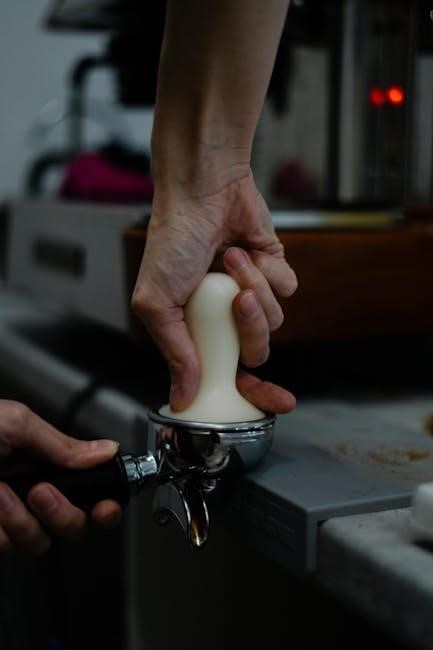
A coffee grind size chart PDF will detail that brewing with a fine grind necessitates specific techniques. For espresso, tamping pressure is critical, ensuring even water flow through the compacted grounds. The PDF often highlights pre-infusion stages, allowing the coffee bed to saturate before full pressure is applied, maximizing extraction.
Turkish coffee, also detailed in the chart, requires a cezve (ibrik) and careful heating to create a thick, unfiltered brew. The PDF may illustrate the traditional process, including foam development and serving techniques. Understanding the nuances of each method, as shown in the chart, is key to avoiding under or over-extraction, resulting in a balanced, flavorful cup.
Extra-Fine Grind
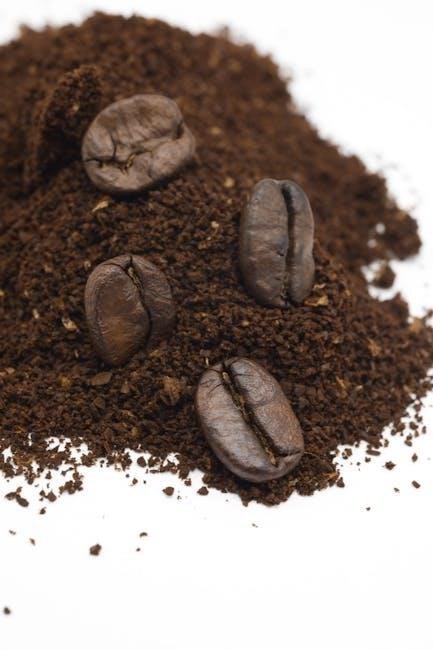
A coffee grind size chart PDF will illustrate that extra-fine grinds are among the most challenging to achieve consistently. This texture, finer than typical espresso, is primarily reserved for Turkish coffee preparation. The PDF emphasizes the importance of a burr grinder for this level of fineness, as blade grinders produce inconsistent particle sizes.
The chart will likely detail the unique brewing process of Turkish coffee, involving direct simmering in a cezve (ibrik). It highlights the need for careful heat control and the development of a rich foam. Achieving the correct grind is crucial; too coarse, and the coffee will be weak, too fine, and it will be muddy.

Uses for Extra-Fine Grind
A coffee grind size chart PDF will predominantly showcase Turkish coffee as the primary application for this exceptionally fine texture. This traditional method involves brewing coffee directly in a cezve, a small, long-handled pot, and is deeply rooted in Middle Eastern and Mediterranean cultures.
The PDF may also mention its occasional use in certain espresso machine setups, though this is less common and requires precise dialing-in. Some individuals experiment with it for intensely flavored cold brew concentrates. However, the chart will likely caution against using this grind for standard brewing methods, as it will lead to over-extraction and a bitter, unpleasant taste.

Visual Guide to Grind Sizes
A coffee grind size chart PDF often includes images comparing textures, from powdery to coarse, aiding in visual identification and ensuring accurate grind selection.
Comparing Grind Sizes: A Visual Aid
Utilizing a coffee grind size chart PDF provides a crucial visual comparison, showcasing the distinct differences between each grind level. These charts typically present images alongside descriptions, allowing baristas and home brewers to easily differentiate between extra coarse, coarse, medium, fine, and extra-fine grinds.
The visual aspect is incredibly helpful, as texture can be subjective. A PDF chart often displays the grounds next to a common object, like salt or sugar, for scale. This aids in understanding how the particle size impacts brewing.
Furthermore, many charts illustrate the effect of grind size on extraction, visually demonstrating how finer grinds yield darker, more concentrated brews, while coarser grinds produce lighter, brighter cups. This visual representation simplifies the complex relationship between grind size and flavor, making it accessible to all coffee enthusiasts.
Using a Grind Size Chart PDF
A coffee grind size chart PDF serves as an invaluable portable resource for achieving consistently excellent coffee. Downloadable charts offer convenience, allowing access on smartphones, tablets, or computers – perfect for brewing on the go or referencing during experimentation.
These PDFs typically categorize grind sizes by brewing method, clearly indicating the ideal consistency for French press, drip, espresso, and more. Many include detailed descriptions of each grind, alongside visual representations for easy identification.
Beyond simple reference, a good PDF chart can aid in troubleshooting. If your coffee tastes bitter or weak, the chart can guide you towards adjusting your grind size for optimal extraction. It’s a practical tool for refining your brewing technique and unlocking the full potential of your coffee beans.

Factors Affecting Grind Size
A coffee grind size chart PDF is a starting point; bean type, roast level, and grinder quality significantly influence the ideal grind for your preferred brew.
Coffee Bean Type and Roast Level
Different coffee bean varieties and their roast levels dramatically impact the optimal grind size, as indicated in a coffee grind size chart PDF. Dense, hard beans like those from Central America often require a finer grind than softer, less dense beans from South America.
Furthermore, the roast level plays a crucial role. Lighter roasts are denser and need a finer grind to achieve proper extraction, while darker roasts, being more porous, extract more easily and benefit from a coarser grind.
A coffee grind size chart PDF can provide general guidelines, but experimentation is key. Adjusting the grind based on your specific beans and roast will unlock the full flavor potential, preventing under or over-extraction and delivering a balanced, delicious cup.
Grinder Type and Calibration
The type of grinder significantly influences grind consistency and, therefore, the effectiveness of a coffee grind size chart PDF. Burr grinders, whether conical or flat, produce a more uniform grind compared to blade grinders, allowing for greater precision when referencing a chart.

Calibration is paramount. Even with a high-quality burr grinder, consistent results require regular calibration. A coffee grind size chart PDF serves as a starting point, but you’ll need to fine-tune based on your grinder’s settings.
Each grinder is unique; understanding its numbered settings and how they correlate to actual grind size is crucial. Regularly testing and adjusting ensures you’re achieving the desired extraction for your chosen brewing method.
Troubleshooting Grind Size Issues
A coffee grind size chart PDF helps diagnose issues; under-extraction means a coarser grind, while over-extraction suggests a finer adjustment is needed for better flavor.
Under-Extraction vs. Over-Extraction
Understanding extraction is key to brewing excellent coffee, and a coffee grind size chart PDF is invaluable here. Under-extraction occurs when water doesn’t dissolve enough compounds from the coffee grounds, resulting in a sour, weak, and often salty taste. This typically indicates the grind is too coarse, or the brewing time is too short.
Conversely, over-extraction happens when too many compounds are extracted, leading to a bitter, harsh, and empty flavor profile. This usually means the grind is too fine, or the brewing time is excessively long.
Referencing a chart PDF allows you to quickly identify if your current grind size is contributing to these issues, guiding you towards adjustments for a balanced and flavorful cup. It’s a visual aid for pinpointing the sweet spot!
Adjusting Grind Size for Optimal Flavor
Fine-tuning your grind is crucial, and a coffee grind size chart PDF serves as an excellent starting point. If your coffee tastes sour, shift to a finer grind to increase extraction. Conversely, if it’s bitter, coarsen the grind to reduce extraction.
Small adjustments are key – making drastic changes can throw off the balance. Remember to only alter one variable at a time (grind size, water temperature, brew time) to accurately assess the impact.
Utilizing a chart PDF helps you systematically experiment and document your findings, leading to a personalized brewing profile. Consistent note-taking alongside the chart will unlock the full potential of your beans!